Per-increment AI Bill of Materials
Each generated module ships with a manifest linking files to upstream stories, ADRs, and approvers — exportable as one trail.

Every line traces back to a requirement, a decision, and a human approver. No orphan code.
expandev generates and manages traceability metadata — an AI Bill of Materials (AI BOM) — for every software increment delivered, versioning functional decisions, architectural decisions, and the corresponding source code jointly and in coordination.
There is no orphan code: every evaluated component is logically linked to its original functional requirement, the corresponding architectural constraint, and — crucially — the human developer responsible for approving it. The why, the how, and the who of every line of software can be traced transparently.
Each generated module ships with a manifest linking files to upstream stories, ADRs, and approvers — exportable as one trail.
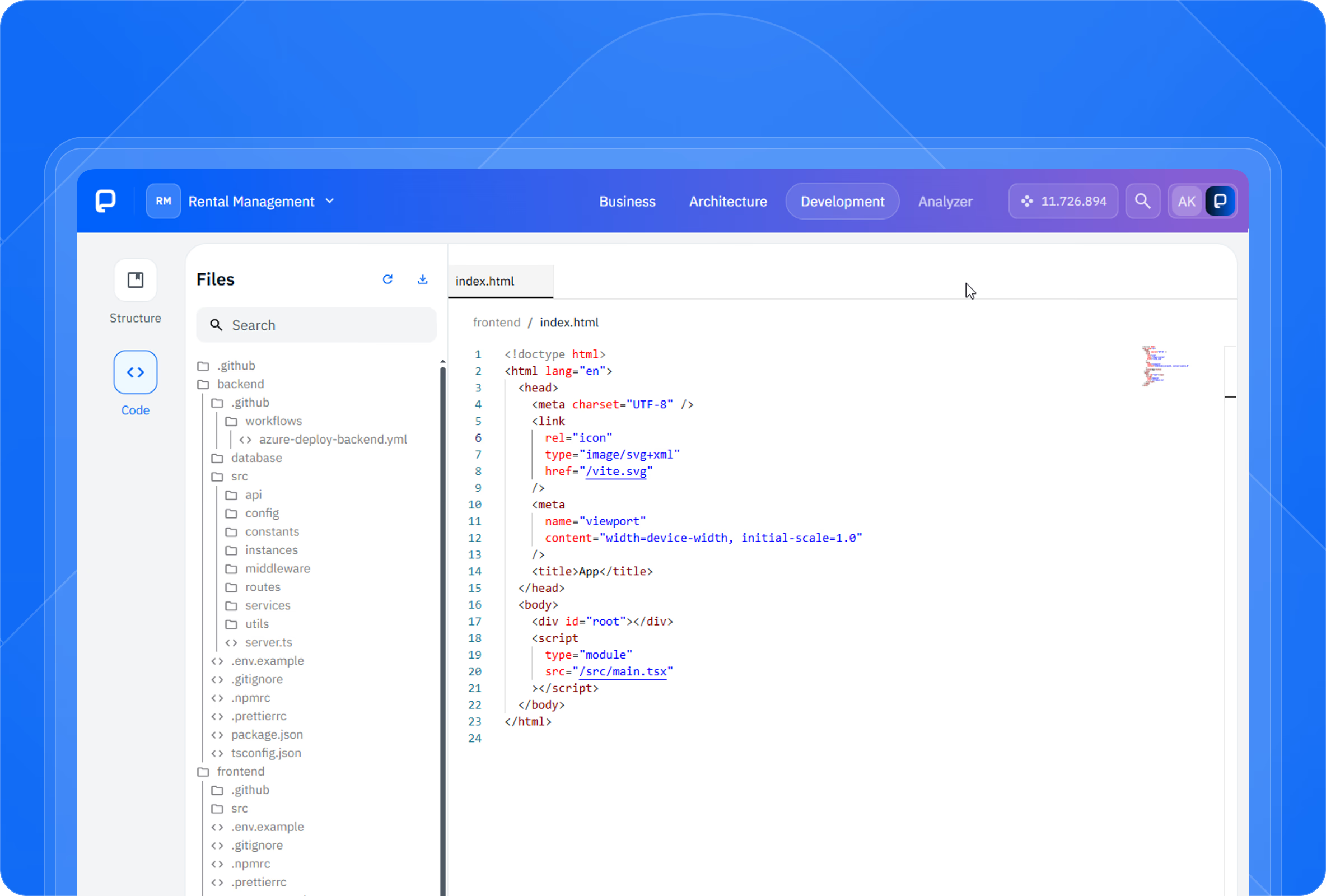
Open a file in the Code view, see its upstream chain — story → acceptance criterion → ADR → named approver — in the side panel.
A story change increments all dependent artifacts; the history is one timeline, not three.
The developer who approved generation is bound to the output by reference. "The AI did it" is never an attribution.
Surfaces inside the Development workspace, across two views: Structure (the navigable domain map) and Code (file-level browser). Each file carries its provenance in a side panel.
Compliance produces audit evidence without archaeology. Engineering leaders defend any line of code on demand. Architects see whether their decisions actually shaped the codebase — or were silently overridden.

Tell us about your team and we'll tailor a walkthrough to your stack, your governance needs, and the way you ship.